

Six Years in Scranton

We lived for almost six years on one side of Rary’s duplex on West Market Street. I remember feeling wrapped in the warm embrace of doting grandparents, aunts, uncles and cousins. Photos reveal a rather shabby, white, clapboard house with peeling paint and a front porch slouching toward the road, but it might as well have been a palace for me, my brother Peter, and sister Beth. We lived just a few houses up the hill from Uncle Tony’s dark green house (the Hennigan Family homestead) and a few blocks down the hill and around the corner from Aunt Rita’s perfect white house with green metal awnings over each window. Hers was the original Corish Family homestead and had housed a family of nine: my grandmother, Mary Catherine, the oldest; Aunt Rita, the baby of the family; and five brothers between them, arriving over 5 years.
Uncle Tony’s house was dark and formal. We had to call ahead for a visit, sit with ankles crossed on uncomfortable plastic-covered chairs in a stark parlor, and wait while Aunt Mary (Tony’s Lady) served us tea in cups with saucers. They had no children of their own so they loved “entertaining” us, but it was no tea party. Crystal candy dishes, white doilies, and framed pictures of relatives in sepia tones sat in tantalizingly easy reach, but could never be touched.
In contrast, Aunt Rita’s house was open and welcoming. If she wasn’t sitting on her couch watching As the World Turns or General Hospital with an ever-present cup of coffee, a pack of cigarettes, and her loyal border collie, Chip, at her side, she was standing over vats of boiling potatoes, green beans, and pork roast in the warm and steamy kitchen. She pulled up the trap door to the earthen basement and sent us down to retrieve cans of sauce or beans from shelves crammed full of preserved goodness from the garden out back: peaches, applesauce, jams, beets, and every imaginable kind of pickle. The pull-chain light revealed treasures in every corner. An active coal chute was a perfect hiding place and escape hatch to the side yard. The sewing table always had a project in progress. A makeshift bedroom occupied one wall with handmade curtains hanging from floor joists for privacy, and a collection of toy army men and trucks lay scattered about in ever-changing configurations of war.
When Uncle Patty wasn’t listening to a ballgame on the radio on the front porch swing, he tended green beans and snap peas, corn and cucumbers, roses and raspberries in two side gardens outside the old gray barn. He puttered among automotive treasures, old farm tools, and gasoline engines with Beth and me his silent twin shadows. When he was working, he opened the barn doors wide to let in the light, but Beth and I liked returning after he had closed the doors. We squeezed into the gap to marvel at the daytime stars. The old metal roof, speckled with rust and nail holes, sparkled like the night sky.
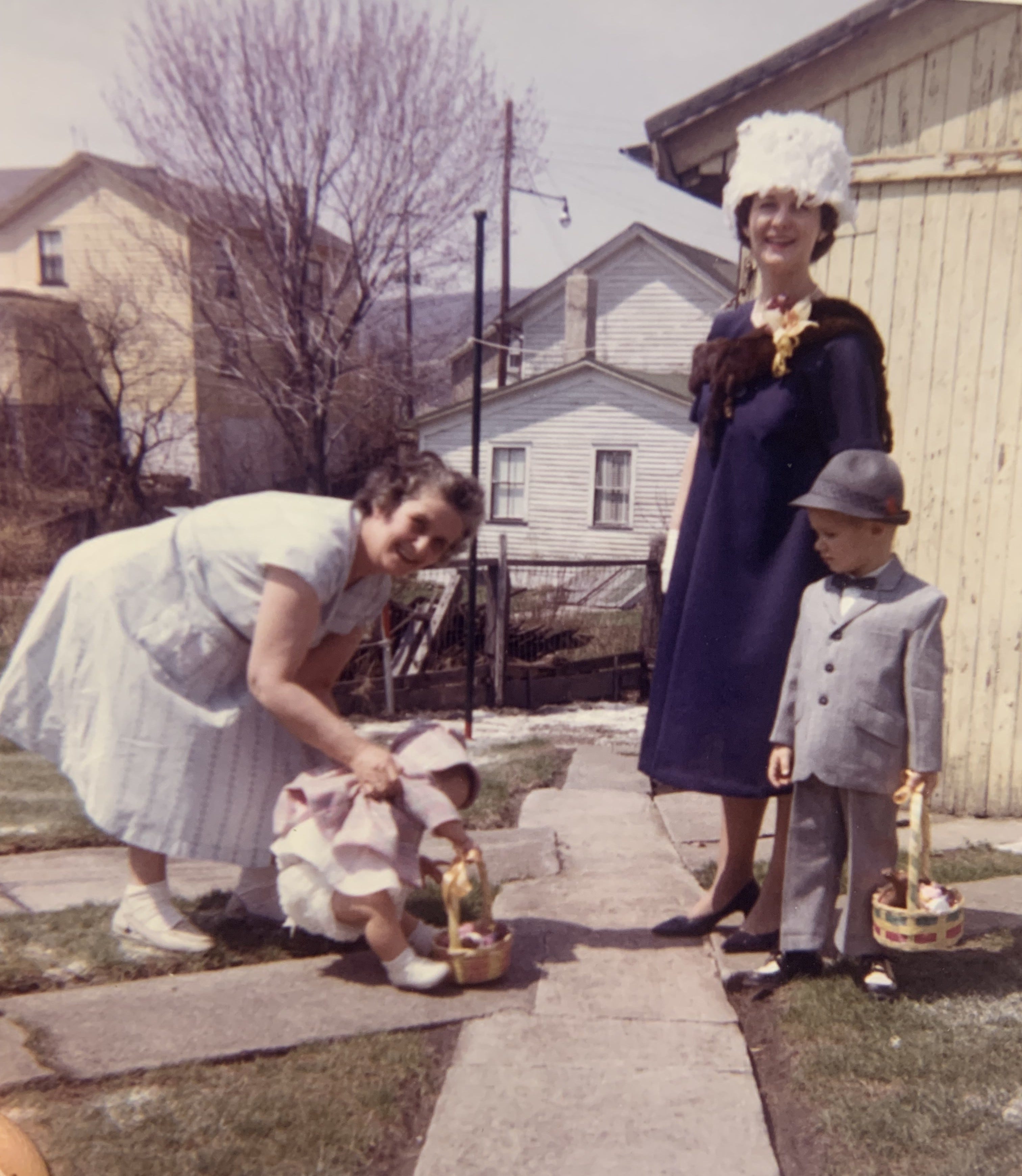
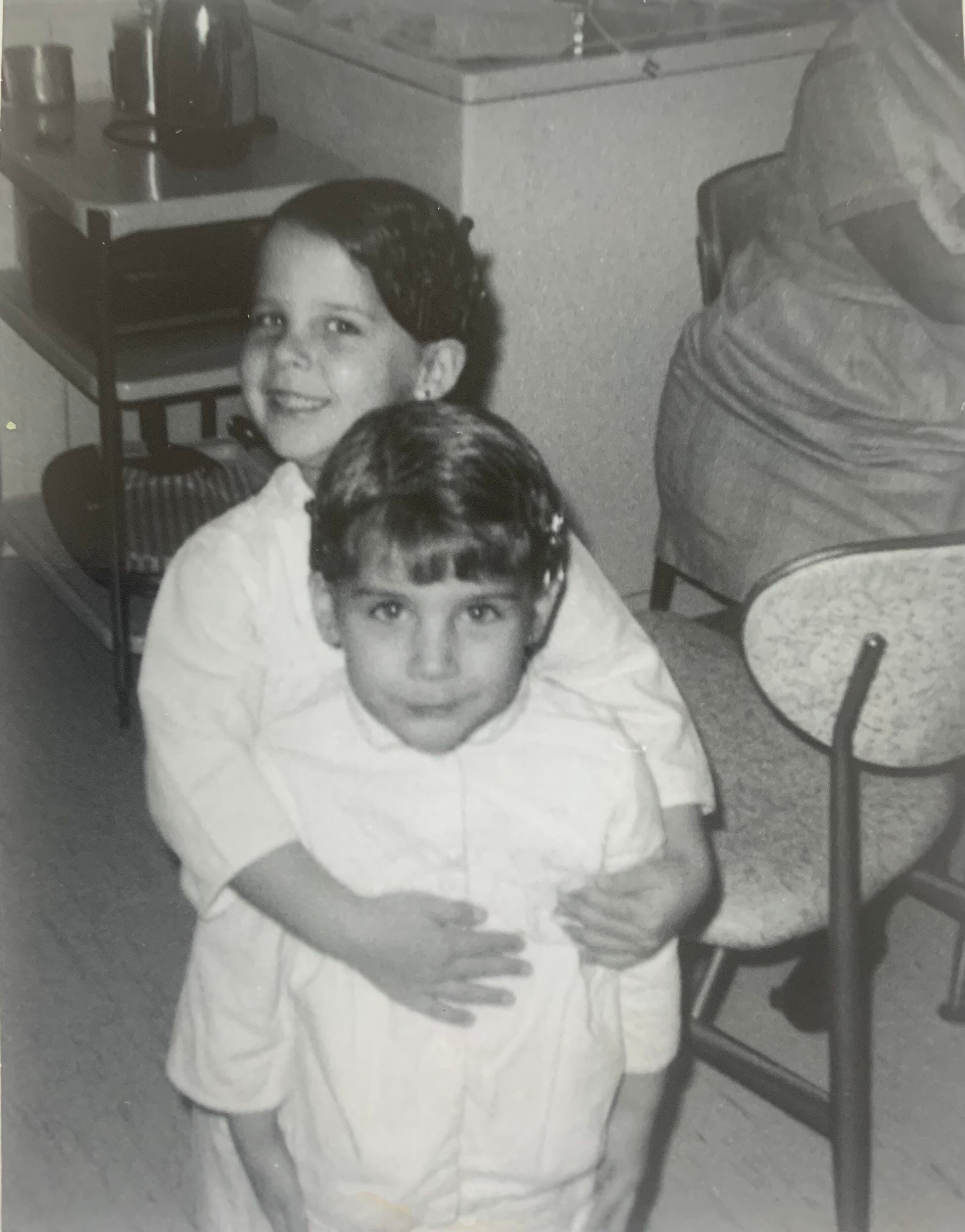
Photographs from our years in Scranton show us posed in holiday clothes through the years and seasons. Pregnant Mom in an oversized coat, pillbox hat, and fox stole with Peter watching Aunt Rita trying to prop me up. Beth and I are awkward toddlers in bright Easter coats and ribboned hats. Peter holds our hands and squints into the sun on Aunt Rita’s bulkhead, our big brother in a little-boy-blue suit. Later, we hug each other in matching pajamas and pinned-curls, making a bid for more time in the kitchen after baths and before bed.
I don’t know the details of Mom’s pastoral counseling, of course. Arranged by her father and the old parish priest, she met weekly with Father Jim, who at the time was a newly ordained, young priest, recently returned from his training in Rome. We watched Father Jim preach from the altar, prepare communion wafers, and wave clouds of incense in Sunday morning rituals. He was an imposing figure in flowing robes, rimmed in red and gold. His booming voice rang through the church in loud, long unintelligible notes.
Church had been a holiday only event, but soon we started going every week. The bedtime routine changes after Saturday night baths. Beth and I stand stock still while mom parts our wet hair into thin sections and winds it tightly around pink cushioned rollers snapped all over our heads. The rollers make it hard to sleep and only a few are still in place in the morning. Sunday clothing awaits us after breakfast. Ruffly underwear, tulle petticoats, and lace-trimmed socks may look pretty but they are stiff and uncomfortable. We shift and squirm and scratch in the backseat on the way to church.
Mom teeters on narrow spiked heels, wobbly over toes pressed into unnatural points as we climb the thick stone steps, our wrists held tight in her gloved hands. When I reach for the holy water in its cool, stone basin inside the door, she squeezes my hand, yanks me to her side, and hisses into my ear, “Don’t you dare embarrass me.”
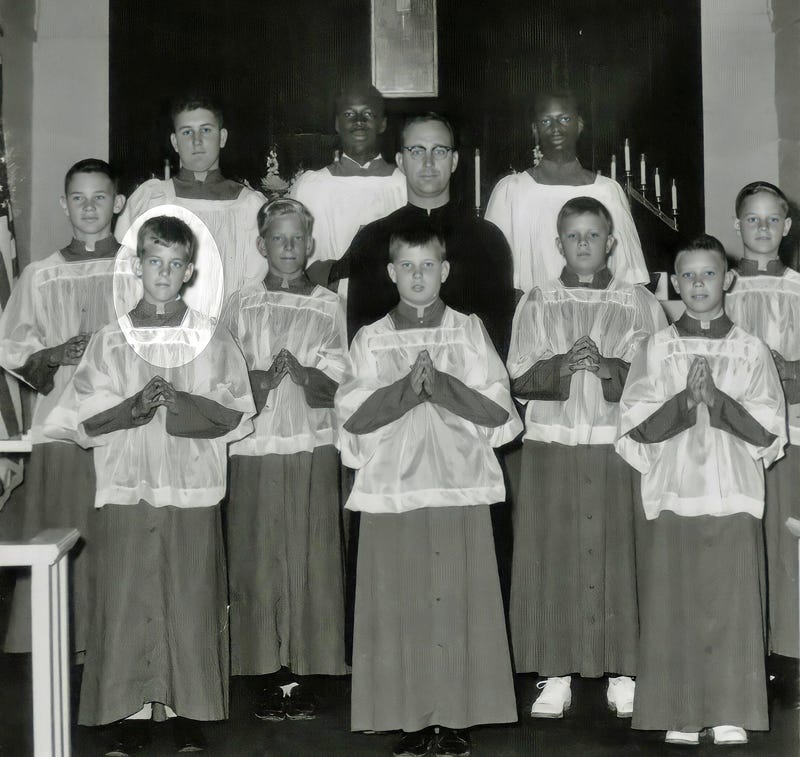
We find seats amid the silence and echoes. Beth sits between me and mom, and Peter parades with the priests in a long-sleeved, oversized robe. Sometimes he carries a cross, sometimes a chalice. He and the other altar boys are miniature versions of Father Murray and Father Jim. Organ music and deep voices flood the sanctuary. The service is long. We sit; we stand; we kneel; we pray; we sit some more. Beth and I bow our heads. We copy the sign of the cross. We kick our legs, fast and slow, in unison and giggle silently. We squint at the candlelight and send splinters of light in all directions while the adults receive communion. When mass is over, we file out with the other parishioners. Father Murray leans over, holds his robe out of the way to shake our hands. “Peace be with you,” he says, and I want to reach for the dangling rosary. “Peace be with you,” we mumble and then burst into daylight, free at last while Mom talks with the grown-ups until it is time for the crowded Sunday dinner table at Aunt Rita’s house.
Outside of church, Father Jim wears black clerical clothing and appears smaller when he visits the house. In one photo, he holds me and Beth, one on each knee, in an overstuffed chair beside our Christmas tree. We lean away from him, eyes wide. His large hands splay over our chests. He smiles broadly, looking into the camera through thick, black-framed glasses. One of his front teeth is gray, stark contrast to the white square in the middle of his collar.
Thank you for reading, Starry Starry Kite. Please share it with a friend.
Well first me, Linda!
Linda, That ending? Hands splayed across your chests? ? Am I understanding you correctly? Or am I misreading based on years of revelations? I mean I was raised Catholic and my memories include thinking the priest had pickle breath and…that I, as early as second grade, was 100% not impressed, fully aware that they couldn’t prove any of what they were laying down in Catechism!